

Creating the perfect preschool classroom setup is like crafting a masterpiece—one that inspires creativity and curiosity in little minds. Imagine a space where vibrant colors dance on the walls and cozy corners invite exploration. It’s not just about furniture; it’s about building an environment that sparks joy and learning.
Every toy, rug, and bookshelf plays a vital role in this adventure. With the right setup, children can transform into budding scientists, artists, or even astronauts, all within the same room. So, let’s dive into the art and science of designing a preschool classroom that’s both functional and fun, ensuring those tiny tots thrive while having the time of their lives. After all, who says learning can’t be a blast?
Importance Of Preschool Classroom Setup
An effective preschool classroom setup promotes exploration, learning, and socialization among young children. The arrangement of furniture influences movement and interaction; open spaces encourage group activities while designated areas allow for individual play. Each corner in the classroom serves a specific purpose, catering to diverse learning styles and interests.
Bright colors and familiar themes create an inviting atmosphere that captivates children’s attention. Engaging displays of artwork or educational materials inspire creativity and stimulate curiosity. Young learners find motivation in their surroundings when everything is visually appealing and thoughtfully organized.
Accessibility of materials is crucial to fostering independence. Children thrive when they can choose their own activities and freely access resources. Shelves and storage spaces should provide a range of easily reachable supplies, promoting decision-making skills and encouraging responsibility.
Safety remains a top priority in preschool classrooms. Arranging furniture to minimize hazards, using non-toxic materials, and ensuring pathways are clear supports a secure environment for playful exploration. A well-planned classroom setup guarantees children can navigate their surroundings confidently.
Incorporating zones for various activities, such as reading, art, and sensory play, accommodates the wide-ranging developmental needs of preschoolers. Each area must invite children to engage, whether alone or with peers, enhancing social interaction and collaboration.
Consideration of classroom layout, aesthetics, and functionality ultimately fosters a nurturing environment where children feel valued. Strong connections form between these elements, resulting in an enriching preschool experience that lays the foundation for lifelong learning.
Key Elements Of An Effective Classroom Setup
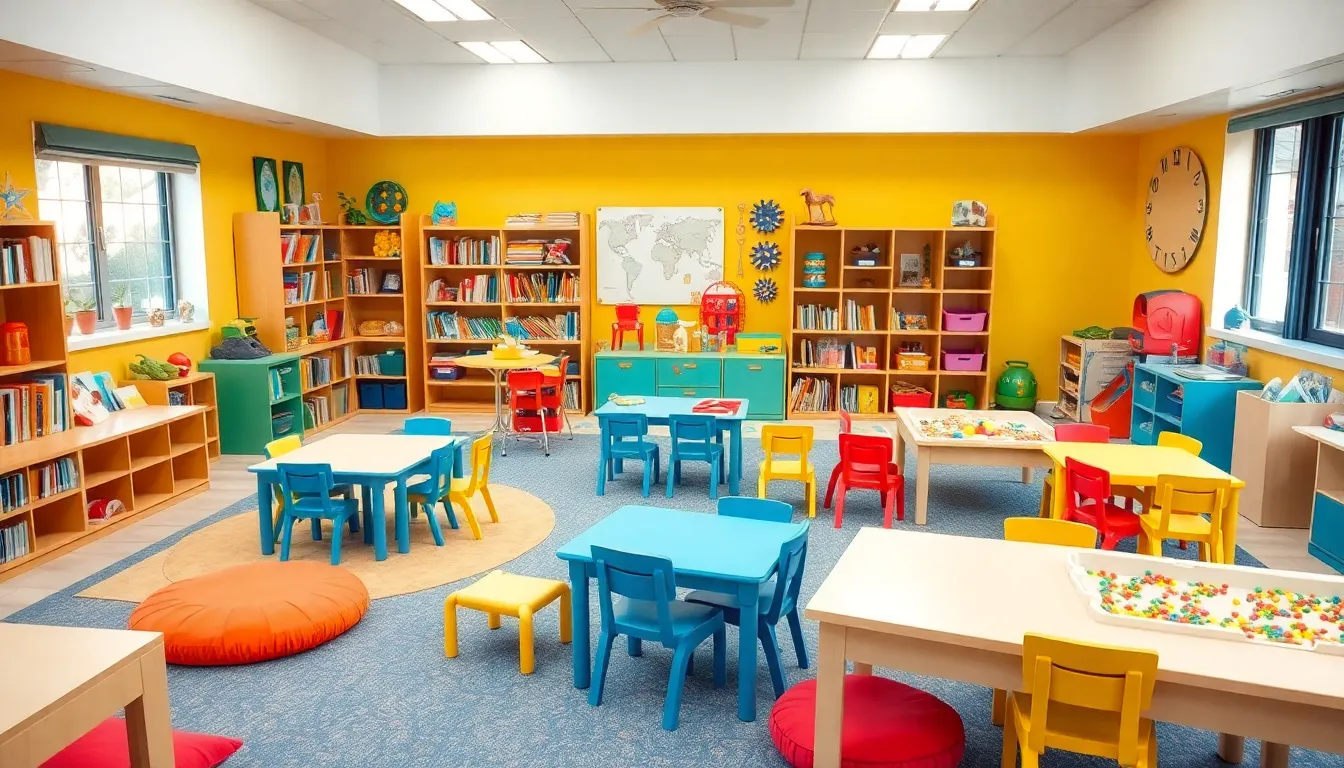
A well-designed preschool classroom setup supports active learning and development. Key elements play crucial roles in fostering a positive learning environment.
Learning Centers
Learning centers create structured spaces where children engage in focused activities. These areas facilitate exploration through hands-on experiences. Examples of learning centers include reading nooks, art stations, and sensory tables. Each center should cater to different skills, encouraging children to choose their interests. By rotating materials regularly, educators maintain engagement and curiosity among preschoolers.
Furniture Arrangement
Furniture arrangement significantly impacts movement and interaction in the classroom. Properly spaced furniture enhances both comfort and safety. An effective layout incorporates various seating options, such as chairs and floor cushions. Zones for group activities can be separated from individual spaces. Gathering areas encourage collaboration while giving children a sense of ownership. Thoughtful placement of furniture promotes easy access to materials and activities.
Accessibility Considerations
Accessibility considerations ensure that all children can engage with the classroom environment. Safe access to materials allows preschoolers to choose their activities autonomously. Organizing materials at reachable heights supports independence and encourages exploration. Placing frequently used items within sight fosters a sense of familiarity. Non-toxic materials should always be prioritized to ensure a safe learning space. Overall, accessibility contributes to a supportive atmosphere that fosters growth.
Creating A Stimulating Environment
A stimulating environment is vital for preschool classrooms. Attractive and engaging spaces encourage exploration and learning.
Color Schemes
Choosing the right color scheme sets the mood for the classroom. Bright colors like yellows, blues, and greens energize the space and stimulate creativity. Incorporating themes that reflect nature or familiar settings promotes comfort. Neutral tones in combination with vibrant accents balance the visual experience, helping children focus on activities without distraction. Consistency in color usage across different classroom areas provides visual cohesion. It influences children’s emotions, enhancing their overall engagement and participation.
Visual Aids And Decorations
Visual aids enhance learning by providing context and excitement. Learning materials such as charts, posters, and interactive displays engage children effectively. Decorative elements like children’s artwork personalize the space and build self-esteem. Placing educational resources at eye level allows for easy access, promoting independence. Rotating these visual aids keeps the classroom dynamic and fresh, encouraging ongoing curiosity. Including labels in the child’s home language supports language development and fosters cultural appreciation.
Safety And Hygiene Considerations
Safety and hygiene play vital roles in preschool classroom setups. Ensuring that all materials used are non-toxic protects young children’s health. Cleaning supplies should also be child-friendly, reducing exposure to harmful chemicals.
Furniture placement is crucial for safety. Arranging tables and chairs to create open pathways minimizes the risk of accidents. This layout encourages safe movement while children engage in various activities.
Regular sanitization of surfaces prevents the spread of germs. Daily cleaning routines should focus on high-touch areas, such as tables, doorknobs, and toys. Soft toys may require frequent washing to maintain hygiene standards.
Creating a designated area for sick children prevents illness in the classroom. Equip this space with comforting items like books and soft pillows, helping ill children feel cared for while isolated.
Additionally, storage of materials must prioritize safety. Sharp objects, such as scissors, should be kept out of children’s reach. Organizing supplies in labeled bins ensures that children easily access materials without clutter.
Supervision remains essential. Educators should monitor children during activities to promote safe play. Engaging with children fosters a sense of security and encourages positive behavior.
Implementing a consistent handwashing routine strengthens hygiene practices. Teaching children to wash their hands before meals and after playing reinforces healthy habits. Integrating this routine into daily activities helps children remember its importance.
All safety measures should align with local regulations. Compliance with state and local guidelines ensures a secure environment for exploration. Following these considerations allows educators to create an inviting space where learning thrives without compromising health and safety.
Creating an inspiring preschool classroom setup is essential for nurturing young minds. An engaging environment not only sparks curiosity but also fosters independence and social interaction. By thoughtfully arranging furniture and incorporating vibrant colors children are encouraged to explore and learn in a safe space.
Regular updates to learning centers and accessible materials enhance engagement and cater to diverse learning styles. Prioritizing safety and hygiene ensures that children can thrive without worry. Ultimately a well-designed classroom setup lays the foundation for joyful learning experiences that shape a child’s development and love for education.