
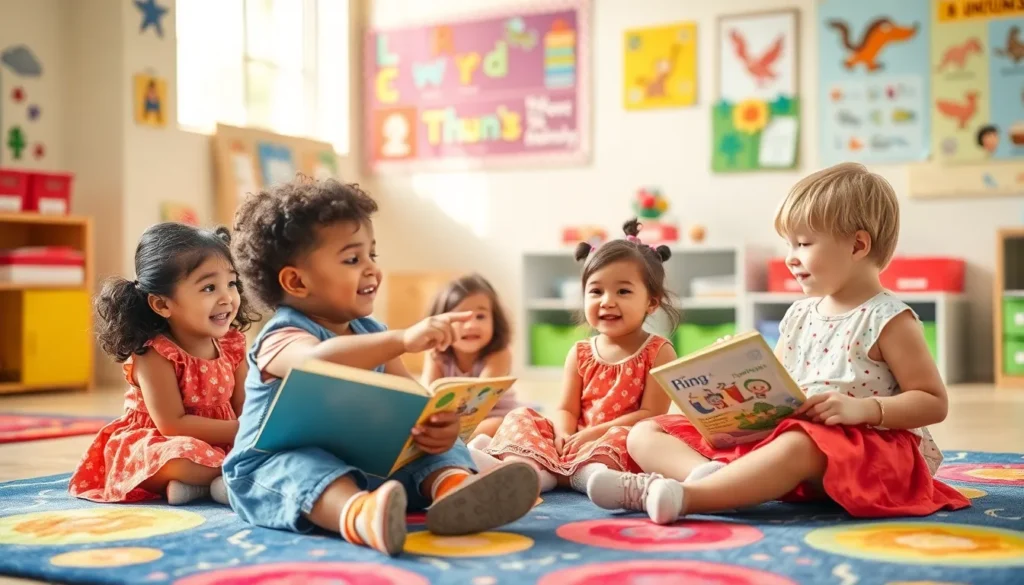
Every parent knows that toddlers have a knack for turning even the simplest phrases into a comedy show. One moment, they’re asking for “more juice” and the next, they’re declaring “I’m a dinosaur!” in a voice that could rival any Hollywood actor. Preschool language development isn’t just about learning words; it’s the foundation for communication skills that will last a lifetime.
Overview of Preschool Language Development
Preschool language development significantly influences children’s ability to express themselves. It typically occurs between ages three and five, where dramatic growth in both vocabulary and comprehension takes place. By age three, children usually know about 200 words and can form short sentences. Expansion of vocabulary continues rapidly, with a five-year-old often knowing around 1,500 words.
Children at this stage begin to understand the concept of conversation. They learn to take turns in dialogues and respond appropriately to questions. Listening skills improve, allowing them to follow simple directions and stories.
Social interactions contribute greatly to language development. Engaging in play with peers or adults provides opportunities for practice and reinforcement. Storytime becomes an essential activity, exposing children to new words and sentence structures.
Rhyming games and songs also enhance language skills. They introduce children to sounds and patterns of speech, stimulating auditory skills. Participation in such activities develops phonemic awareness, which is critical for reading readiness.
A child’s environment plays a key role in this process. Exposure to diverse language experiences, such as conversations with adults, reading books, or seeing variations in language use, fosters robust language abilities.
Preschool language development lays the groundwork for academic success and social interaction. Establishing a strong base leads to improved literacy skills as children progress into higher learning stages.
Milestones in Language Development
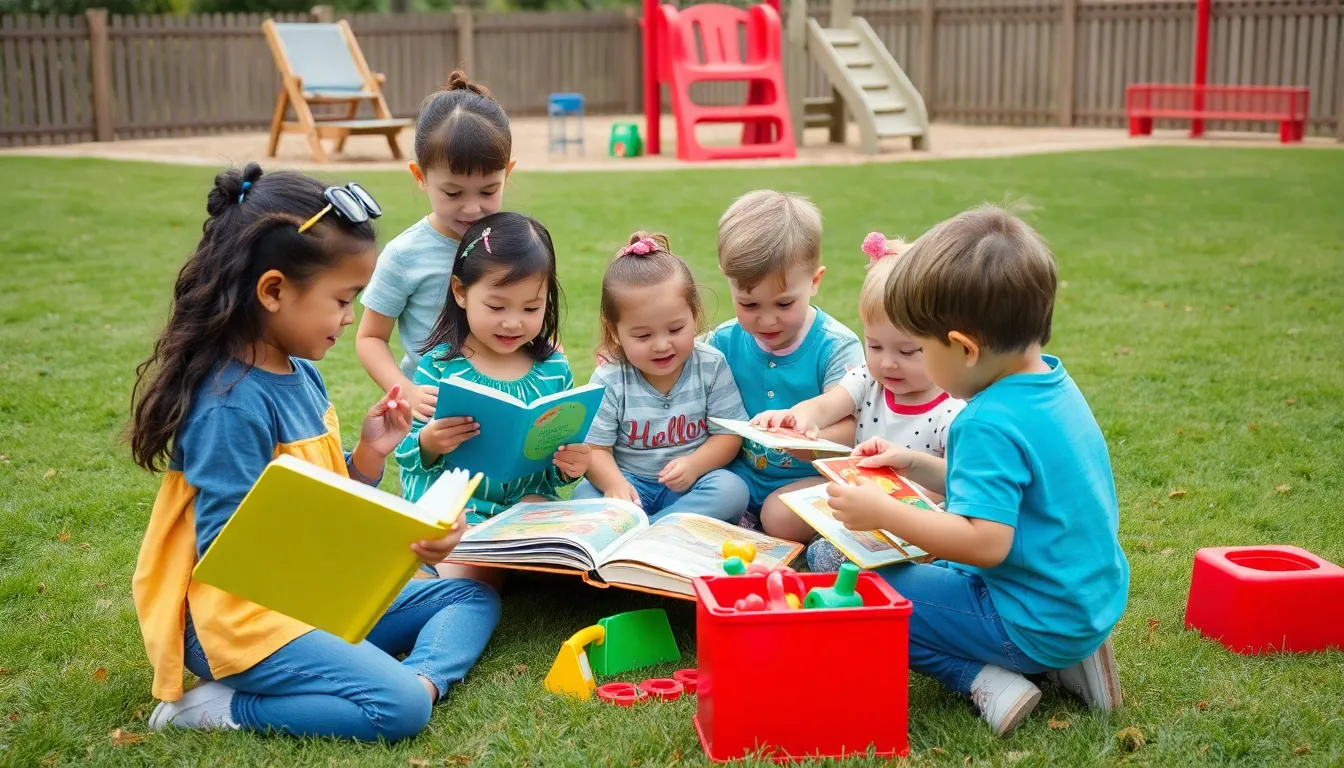
Preschool language development includes several key milestones that indicate progress in a child’s communication skills.
Early Vocabulary Acquisition
By age three, children typically know about 200 words. Rapid vocabulary growth occurs as they begin forming short sentences. Around age five, vocabulary often expands to around 1,500 words. Pronouns, action words, and descriptive adjectives emerge in their speech. Engaging in conversations and using language in play situations significantly enhances word acquisition. Speaking regularly with caregivers and peers supports robust vocabulary growth. Frequent exposure to books and storytelling promotes understanding of new words, contributing to overall language development.
Phonetic Awareness
Phonetic awareness develops as children start recognizing and manipulating sounds in words. They begin to understand that words consist of individual sounds or phonemes. By age four, many children can identify rhymes and generate rhyming words. Listening activities, such as singing songs and playing rhyming games, boost this skill effectively. Identifying letters and sounds prepares children for future reading and writing. Phonetic awareness serves as a foundation for literacy and enhances overall language proficiency. Engaging in these activities reinforces their knowledge and supports continued language growth.
Factors Influencing Language Development
Language development in preschoolers is shaped by various factors that contribute to their overall communication skills. Understanding these influences helps caregivers and educators enhance children’s language experiences.
Family Environment
Family interactions significantly impact a child’s language development. Rich verbal communication at home fosters vocabulary growth and comprehension skills. Engaging in conversations encourages children to express their thoughts, while reading together strengthens their understanding of language structure. Exposure to diverse language experiences within the family enhances creativity in expression. Children benefit from listening to family stories and participating in discussions, leading to better social communication abilities.
Socioeconomic Status
Socioeconomic status plays a critical role in access to language-rich environments. Children from higher socioeconomic backgrounds often experience more stimulating language interactions. Families with greater resources may provide books, educational toys, and experiences that support language learning. Conversely, limited resources can restrict exposure to language, affecting vocabulary development and comprehension. Disparities in language experiences can impact academic preparedness, making it essential to address these gaps for equitable language development opportunities.
Strategies to Encourage Language Skills
Language development thrives through engaging activities. Adults play a vital role in encouraging language skills during preschool years.
Interactive Reading
Choose interactive books that invite participation. Stories with repetitive phrases encourage children to join in while reading aloud. Asking questions about the story helps deepen comprehension. Specific prompts like “What do you think will happen next?” engage children’s imagination and critical thinking. Utilizing picture books fosters vocabulary growth by introducing new words in context. Encourage children to describe illustrations. This practice reinforces language structure and aids in vocabulary expansion. By incorporating these strategies, reading time becomes a valuable opportunity for language enhancement.
Play-Based Learning
Incorporating play in learning accelerates language skills. Role-playing activities mimic real-life situations, allowing children to practice conversation. Using toys can stimulate dialogue among peers, promoting social interaction. Small group play encourages collaboration and language exchange as children negotiate roles and rules. Singing songs and rhyming games captivate children’s attention, making learning fun. Activities in nature or community settings inspire rich discussions about surroundings. Exploring new environments also introduces unfamiliar vocabulary. Fostering play-based learning creates a dynamic foundation for effective communication skills.
Challenges in Preschool Language Development
Language development in preschoolers often encounters several challenges. Awareness of these issues is essential for parents and educators.
Speech Delays
Speech delays affect many children during their preschool years. Approximately 10 to 15 percent of preschool-aged children experience significant speech delays. Often, these delays manifest as difficulties in pronouncing words or forming sentences. Parents may notice that their child struggles to communicate basic needs or emotions. Early identification and intervention enhance the likelihood of overcoming speech delays. Accessing speech therapy or supportive resources can lead to significant improvements. Engaging children in conversations, reading aloud, and practicing basic sounds also helps foster clearer speech.
Language Disorders
Language disorders present additional obstacles in preschool language development. Conditions like expressive language disorder or receptive language disorder affect a child’s ability to communicate and understand language. Research indicates that about 7 to 10 percent of children in preschool exhibit symptoms of language disorders. Children with expressive language disorders struggle to form complete sentences or express ideas clearly. Receptive language disorders make it hard for children to comprehend and process spoken language. Timely assessment by speech-language pathologists is crucial. Customized speech therapy and structured language-building activities support effective language progression in these cases.
Preschool language development is a vital aspect of early childhood that shapes a child’s ability to communicate effectively. As children navigate this critical period, their vocabulary and comprehension skills expand rapidly, laying the groundwork for future academic and social success. Engaging in language-rich activities and fostering a supportive environment can significantly enhance their learning experience.
Addressing challenges such as speech delays and language disorders is equally important. Early intervention can make a difference in helping children overcome these hurdles. By prioritizing language development during the preschool years, caregivers and educators can empower children to express themselves confidently and prepare them for a bright future.