

Elementary school is a magical place where kids transform from tiny tots into budding scholars, all while navigating the complexities of lunchroom politics and dodgeball strategies. But how old are these pint-sized scholars exactly? Typically, they start their academic journey around the ripe age of five and wrap it up by about eleven or twelve.
Understanding Elementary School Age
Elementary school serves as a critical period where children grow academically and socially. Typically, students enter this stage of education around age five, progressing through grades while developing essential skills.
Typical Age Range for Elementary Students
Children in the elementary school system usually range from five to twelve years old. These ages align with significant developmental milestones. Five-year-olds are often just beginning their formal education, exploring foundational skills and basic social interactions. They transition into older age groups like seven or eight, where learning becomes more structured. By the time they turn eleven or twelve, students demonstrate increased independence, critical thinking, and collaboration abilities.
Grade Levels and Corresponding Ages
Grade levels directly correlate with student ages in elementary education. Kindergarten serves as the starting point, enrolling five-year-olds. First graders typically reach six years old, followed by second graders who are usually seven. This pattern continues through fifth grade, where learners are typically eleven to twelve years old. Each grade offers tailored curricula that match the cognitive development of children, emphasizing various subjects and skills essential for future academic success.
Factors Influencing Age Variation
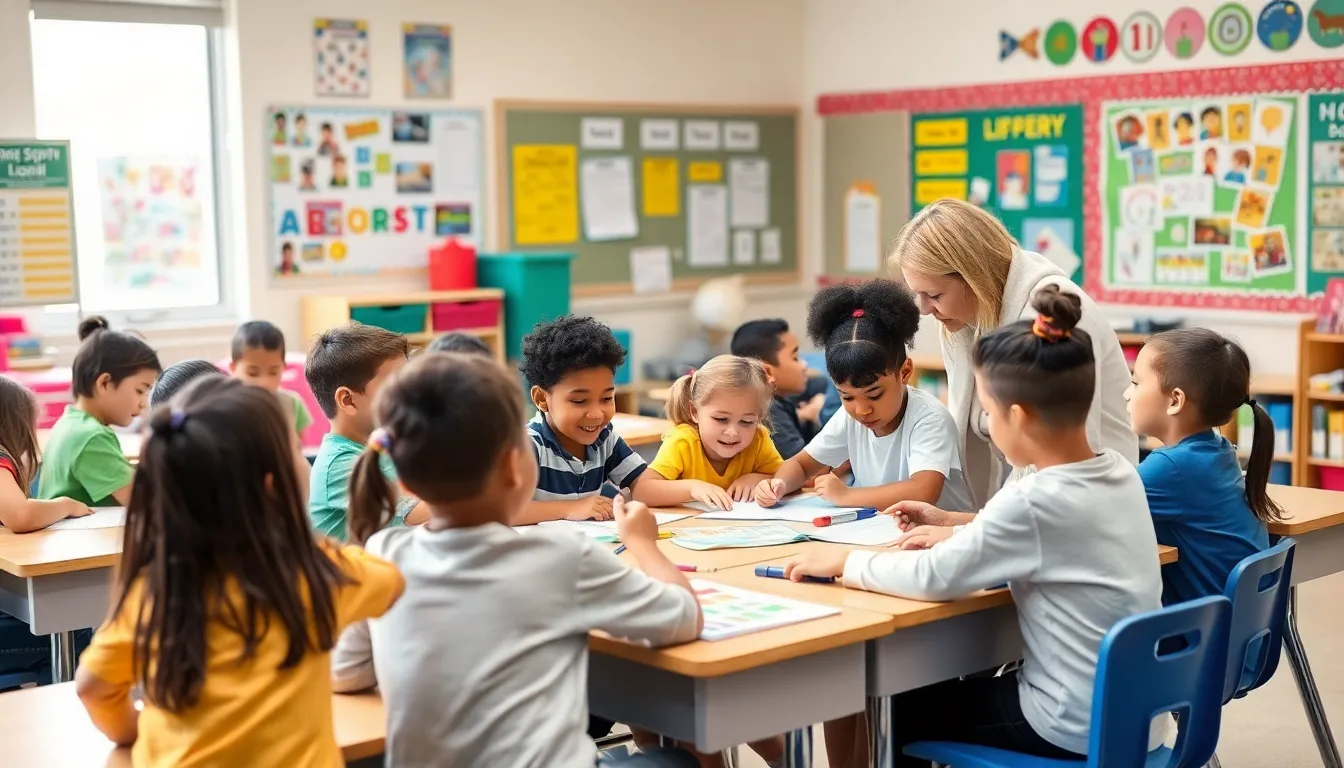
Several factors influence the age variation among kids in elementary school. These include early admission policies and practices like redshirting.
Early Admission Policies
Early admission policies allow children to start kindergarten before reaching the typical age of five. These policies often focus on a child’s developmental readiness rather than strict age requirements. Some districts establish cut-off dates, while others evaluate children through assessments. Early starters may demonstrate advanced cognitive and social skills, enabling them to thrive in school environments designed for older peers. Consequently, these children might complete elementary school at an earlier age, contributing to a range of ages within a given classroom.
Redshirting Practices
Redshirting involves delaying a child’s entry into kindergarten, allowing more time for development. Parents often choose this option for children born close to the cut-off date. This practice usually aims to give children a head start in social and academic skills. As a result, redshirted kids might be older than their peers when they begin elementary school. The decision around redshirting can vary significantly by region and personal beliefs, contributing to further age diversity within classrooms.
The Importance of Age in Education
Age plays a crucial role in the educational journey of children in elementary school. Understanding age-related factors helps educators tailor their approach to maximize learning.
Developmental Milestones
Developmental milestones significantly influence educational experiences. Children typically progress through key stages between ages five to twelve. At around five years old, students enter kindergarten, where they develop foundational skills such as reading, writing, and basic math. By six to seven years old, they demonstrate improved attention spans and begin to grasp more complex concepts. Ages eight to ten mark a transition towards enhanced critical thinking and problem-solving abilities. By the time children reach eleven or twelve, they exhibit substantial independence and the capability to work collaboratively on projects. These developmental benchmarks inform curriculum design, ensuring alignment with the cognitive growth of students.
Social and Emotional Considerations
Social and emotional development correlates closely with age. Younger students may face challenges in managing emotions and forming friendships. By contrast, older students often display better emotional regulation and conflict resolution skills. The age variability in classrooms allows for diverse interactions among students. Older peers frequently model positive behaviors, encouraging younger classmates to adapt and grow socially. Teachers often emphasize fostering a supportive environment that nurtures these skills, promoting empathy, cooperation, and self-esteem. Ultimately, recognizing these factors is essential for creating effective learning environments that cater to the various social and emotional needs of children.
Understanding the age range of elementary school children is crucial for fostering an effective learning environment. Typically spanning from five to twelve years old these formative years shape not only academic skills but also social and emotional development. The variety in ages due to factors like early admission and redshirting highlights the importance of tailoring educational approaches to meet diverse needs.
As children progress through grades they gain independence and critical thinking abilities which are vital for their future success. Recognizing these dynamics helps educators support each child’s unique journey through elementary school ensuring they thrive both academically and socially.