
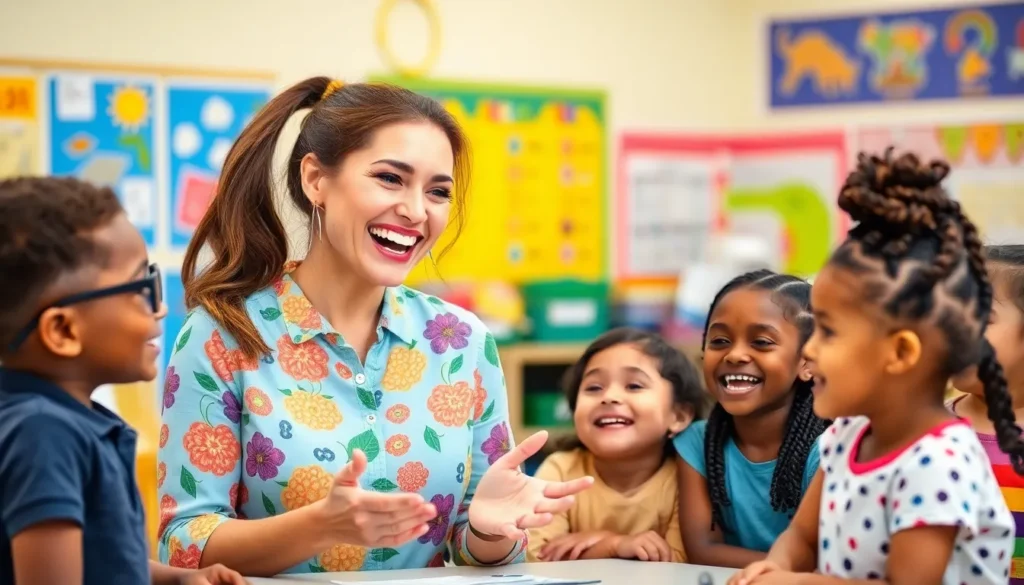
Laughter is the secret ingredient to a happy classroom. When kids share a good joke, it sparks joy and creates lasting memories. Elementary school is a time for giggles and gags, where a simple punchline can turn a dull day into a delightful adventure.
The Importance Of Humor In Childhood
Humor plays a crucial role in childhood development. Laughter enhances emotional resilience among children, helping them navigate challenges and stressors. Sharing jokes in the classroom fosters connections among peers, promoting friendships and social skills. Engaging in humor encourages creativity, allowing kids to think outside the box and express themselves freely.
Research shows that laughter releases endorphins, which boost mood and overall well-being. Strong emotional bonds often form when children share humor, leading to a more positive classroom environment. Additionally, humor can serve as an effective teaching tool, making lessons memorable and enjoyable. Engaging with funny material improves information retention and understanding, keeping kids interested and motivated.
Effective communication skills develop through humorous interactions, as children learn to express themselves and understand others’ perspectives. Creating a lively atmosphere with jokes helps alleviate anxiety, making kids feel more comfortable participating in discussions. Laughter also enhances focus, allowing students to engage better with their lessons.
Incorporating humor into daily activities and learning experiences brightens the classroom. Jokes provide an outlet for creativity and expression, nurturing children’s imaginative skills. Lively exchanges of humor promote inclusivity, ensuring that every child feels valued and part of the group. It’s evident that humor carries significant benefits for children, enriching their childhood experience in multiple ways.
Types Of Jokes For Elementary School Kids
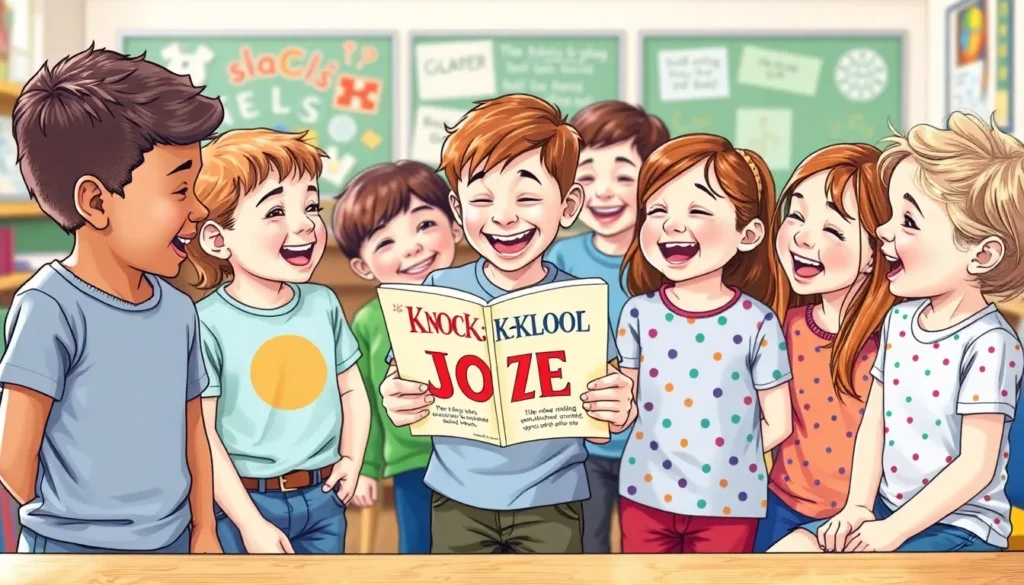
Elementary school kids enjoy various types of jokes, each providing laughter in unique ways. Engaging with these jokes enhances their creativity and social skills.
Knock-Knock Jokes
Knock-knock jokes capture kids’ attention with their interactive format. They allow children to take turns, making them fun for groups. Classic examples include:
- Knock, knock.
Who’s there?
Cow says.
Cow says who?
No silly, cow says moooo!
- Knock, knock.
Who’s there?
Lettuce.
Lettuce who?
Lettuce in, it’s freezing out here!
These jokes rank highly among elementary school jokes due to their simplicity.
Riddles
Riddles challenge kids’ thinking and problem-solving skills. They encourage critical thinking while generating fun. Popular riddles include:
- What gets wetter as it dries?
A towel!
- I speak without a mouth and hear without ears. What am I?
An echo!
These examples spark curiosity and promote interaction among peers.
One-Liners
One-liners deliver quick laughs, providing humor without lengthy setups. They appeal to children’s love for simplicity and brevity. Examples such as:
- Why did the bicycle fall over?
It was two-tired!
- I told my computer I needed a break, and now it won’t stop sending me beach wallpapers!
One-liners cultivate an enjoyable environment while keeping attention focused.
How To Share Jokes In The Classroom
Sharing jokes in the classroom enhances joy and connects students. Timing and delivery play critical roles in ensuring the humor resonates.
Timing And Delivery
Select appropriate moments for joke-sharing. Initiating jokes during downtime or transition times maintains engagement and keeps the atmosphere light. Use an upbeat tone to capture attention. Teachers should deliver jokes at a comfortable pace, allowing children to absorb the humor. Incorporating props or facial expressions enhances the joke’s impact, making it more memorable. Timing also involves recognizing students’ moods; laughter thrives in an open environment where kids feel relaxed and receptive.
Encouraging Participation
Inviting children to share their own jokes promotes a sense of ownership. Create an inviting atmosphere where everyone feels comfortable contributing. Use Q&A sessions or joke-telling contests to stimulate participation. Establish a “Joke of the Day” board and encourage kids to post their favorites. Acknowledging each joke fosters confidence and encourages further involvement. Celebrating creativity within the humor encourages peer connections and reinforces social skills.
Jokes That Are Age-Appropriate
Elementary school kids enjoy jokes that are funny yet simple. Age-appropriate humor includes jokes that align with their understanding. Consider knock-knock jokes, as they encourage interaction and participation.
Here are some examples of suitable jokes:
| Joke Type | Example |
|---|---|
| Knock-Knock | Knock, knock. Who’s there? Lettuce. Lettuce who? Lettuce in, it’s freezing out here! |
| Riddle | What has keys but can’t open locks? A piano. |
| One-liner | Why was the math book sad? It had too many problems. |
Riddles challenge kids’ problem-solving skills and inspire critical thinking. Engaging with riddles often leads to playful discussions among peers. One-liners, meanwhile, provide quick laughs that resonate well with younger audiences.
Teachers can integrate joke-sharing into the classroom routine. Using humor during transitions helps maintain a positive atmosphere. Selecting the right moment for jokes amplifies their impact and captures students’ attention. Props can add a visual element, making the joke more memorable.
Encouragement for students to share their own jokes fosters community. Implementing a “Joke of the Day” board invites enthusiasm and creativity. Organizing joke-telling contests can stimulate friendly competition and camaraderie.
Through laughter, children enhance their social skills and strengthen friendships. Humor not only boosts mood but also enriches the educational experience.
Embracing humor in elementary school settings creates a vibrant atmosphere that enhances both learning and social interactions. By incorporating jokes into daily routines, teachers can foster connections among students while promoting creativity and emotional resilience. The joy of laughter not only boosts mood but also supports critical thinking and effective communication skills.
Encouraging children to share their own jokes cultivates a sense of belonging and community, enriching their overall educational experience. As humor becomes a tool for engagement, it transforms classrooms into lively spaces where friendships flourish and learning thrives. Ultimately, the power of laughter is an invaluable asset in nurturing happy and well-rounded children.