
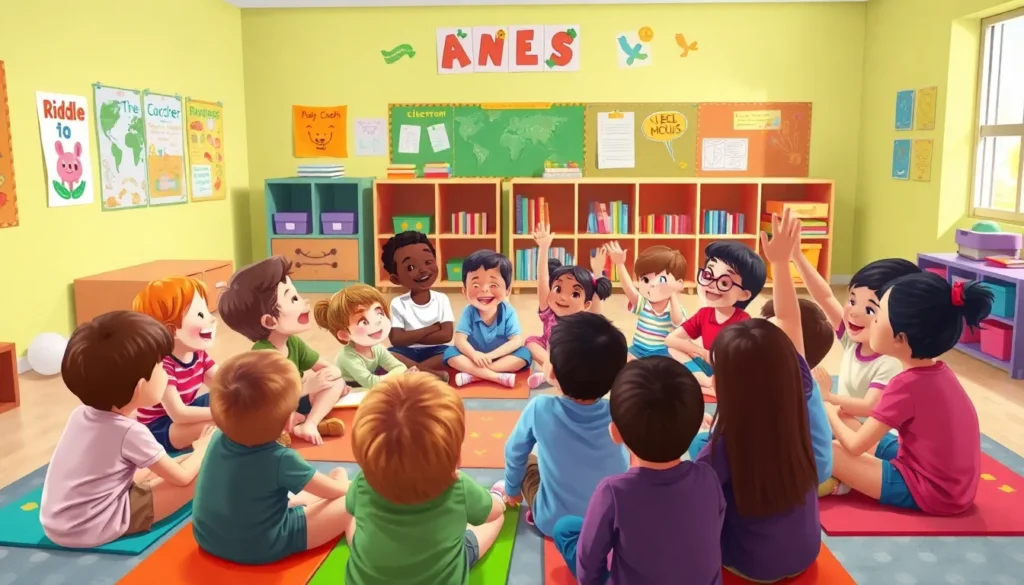
Riddles are like little puzzles that tickle the brain and spark curiosity. For elementary kids, they’re not just fun; they’re a fantastic way to boost critical thinking skills while keeping laughter in the air. Imagine a classroom filled with giggles as kids try to outsmart each other with clever wordplay. It’s a win-win situation—learning wrapped in a delightful package!
Fun Riddles for Elementary Kids
Riddles engage elementary kids and make learning enjoyable. These puzzles not only entertain but also enhance their problem-solving skills. Below are several fun riddles that will spark their curiosity:
- What has keys but can’t open locks?
Answer: A piano.
- I’m tall when I’m young and short when I’m old. What am I?
Answer: A candle.
- What has hands but can’t clap?
Answer: A clock.
- What can you catch but not throw?
Answer: A cold.
- What has to be broken before you can use it?
Answer: An egg.
Each riddle includes elements that encourage creative thinking. Kids will enjoy sharing these with friends and challenging each other to solve them. Fun and laughter accompany learning as they brainstorm answers. Engaging with riddles helps them develop language and cognitive skills in an interactive way. Teachers and parents can use these riddles during classroom activities or playtime at home, making them perfect for various settings.
Incorporating riddles into daily routines adds excitement to learning. Kids will look forward to each new challenge, deepening their love for solving puzzles. These activities create lasting memories filled with joy and laughter.
Benefits of Riddles for Kids
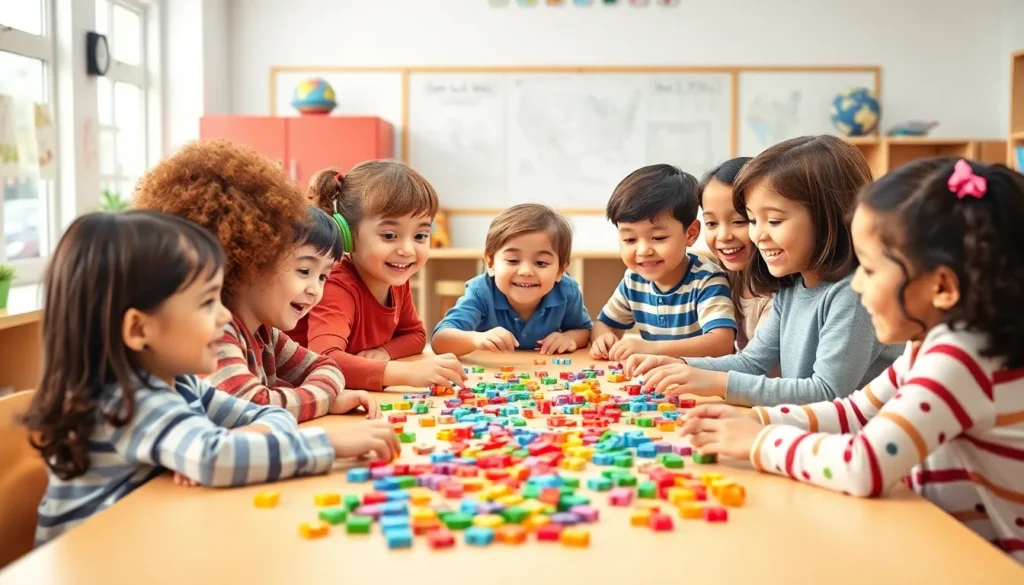
Riddles offer numerous benefits for elementary school children, enhancing their learning experience in enjoyable ways.
Enhancing Critical Thinking
Riddles require kids to analyze clues and draw conclusions. This process sharpens their ability to think critically under pressure. They learn to identify patterns and make connections, cultivating problem-solving skills. Engaging with challenging questions encourages them to explore various perspectives. As children work through riddles, they develop persistence and grit. Teachers can present these riddles during lessons to instill a love for logic and reasoning. Every riddle solved boosts confidence, creating a positive feedback loop that motivates further exploration.
Boosting Creativity
Creative thinking flourishes through riddles. Kids must approach each riddle with an open mind and think outside conventional boundaries. Those moments spark imagination as they visualize different scenarios to find solutions. Language skills enhance when they express their thoughts and ideas. Kids gain appreciation for wordplay, enhancing both vocabulary and communication abilities. Group activities foster collaboration, inspiring them to brainstorm and share unique answers. Adding riddles to class or home activities transforms routine learning into a stimulating adventure. Each riddle offers a chance for innovation, making learning memorable and engaging.
Types of Riddles
Riddles come in various types, providing kids with different ways to engage their minds. Two popular categories include classic riddles and themed riddles.
Classic Riddles
Classic riddles often feature straightforward wordplay and clever twists. These timeless puzzles challenge kids to think critically while also being easily memorable. Examples like “What has to be broken before you can use it?” (Answer: An egg) showcase the simplicity and fun that classic riddles offer. Children enjoy solving these riddles as they improve their reasoning skills. Additionally, they foster a sense of accomplishment when kids find the answers themselves. Overall, the charm of classic riddles lies in their ability to captivate young minds through engaging yet easy-to-understand prompts.
Themed Riddles
Themed riddles provide an exciting twist by incorporating specific subjects, making them more relatable and interesting for elementary kids. These riddles can revolve around topics like animals, seasons, or holidays, enhancing engagement with familiar concepts. An example includes, “I fly without wings, I cry without eyes. Whenever I go, darkness flies” (Answer: A cloud). Themed riddles not only encourage kids to think critically but also expand their knowledge in various areas. Engaging with riddles in these categories helps develop children’s vocabulary while making learning enjoyable and interactive.
How to Engage Kids with Riddles
Engaging kids with riddles enhances their learning experience. Incorporating interactive activities can make riddles even more enjoyable.
Riddle Games and Activities
Riddle games captivate children’s attention while stimulating their minds. Popular activities like riddle treasure hunts encourage exploration. Kids can search for hidden riddles around the classroom or home. Setting up a riddle contest promotes friendly competition, motivating kids to solve riddles quickly. Utilizing digital platforms for online riddle games introduces an interactive aspect. Integrating riddles into subjects like math or science makes learning relevant and fun. Using these engaging methods captivates children’s imagination and keeps them eager to learn.
Encouraging Group Participation
Group participation fosters teamwork and social skills. Organizing riddle-sharing sessions allows kids to present their favorite riddles. Encouraging students to work together in pairs or small groups promotes dialogue. Group discussions on riddle solutions help develop critical thinking. Incorporating a “riddle of the day” during class can create a shared anticipation. Facilitating group challenges where teams compete to solve riddles enhances collaboration. Collaborative activities not only build connections among students but also deepen their understanding in a supportive environment.
Riddles are a powerful tool for elementary kids, blending fun with learning in a way that captures their imagination. They not only spark curiosity but also enhance critical thinking and creativity. By engaging with riddles, children develop essential problem-solving skills while enjoying themselves in a collaborative environment.
Incorporating riddles into daily activities can transform ordinary lessons into exciting adventures. Whether through classic wordplay or themed challenges, these puzzles encourage kids to think outside the box. As they share and solve riddles together, they build connections and foster a love for learning that can last a lifetime. Embracing riddles in classrooms and at home can make education a joyful experience filled with laughter and discovery.