
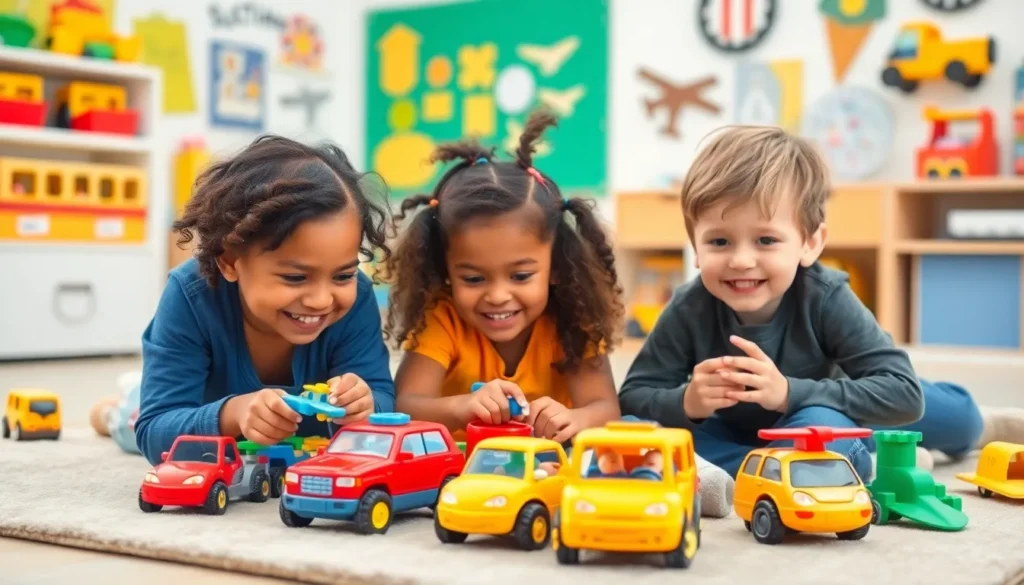
Every preschooler dreams of being behind the wheel of a big truck or soaring through the sky like a jet. Transportation activities not only fuel their imagination but also lay the groundwork for essential skills. Who knew that playing with toy cars or pretending to be a bus driver could turn into a fun-filled learning experience?
Importance Of Transportation Activities
Transportation activities play a crucial role in preschoolers’ development. Engaging in these activities fosters creativity while simultaneously enhancing key skills.
Enhancing Motor Skills
Motor skills develop through hands-on activities involving transportation toys. Children show increased dexterity when pushing toy trucks or maneuvering small cars. They improve hand-eye coordination while navigating tracks or creating roadways. Engaging in role-play as bus drivers encourages large muscle movements. Activities like these involve lifting, running, and jumping, which all support physical fitness. Each experience promotes balance and coordination, essential for further physical activities.
Promoting Cognitive Development
Cognitive development occurs as preschoolers interact with various modes of transportation. Engaging in pretend play enhances problem-solving abilities, as they navigate routes or create scenarios. Understanding different vehicles fosters critical thinking about their functions and purposes. Vocabulary expands when discussing transportation terms, such as airplane or bicycle. Sorting objects by size or type helps strengthen categorization skills. These activities lay the groundwork for future learning about science and geography.
Fun Transportation Activities For Preschoolers
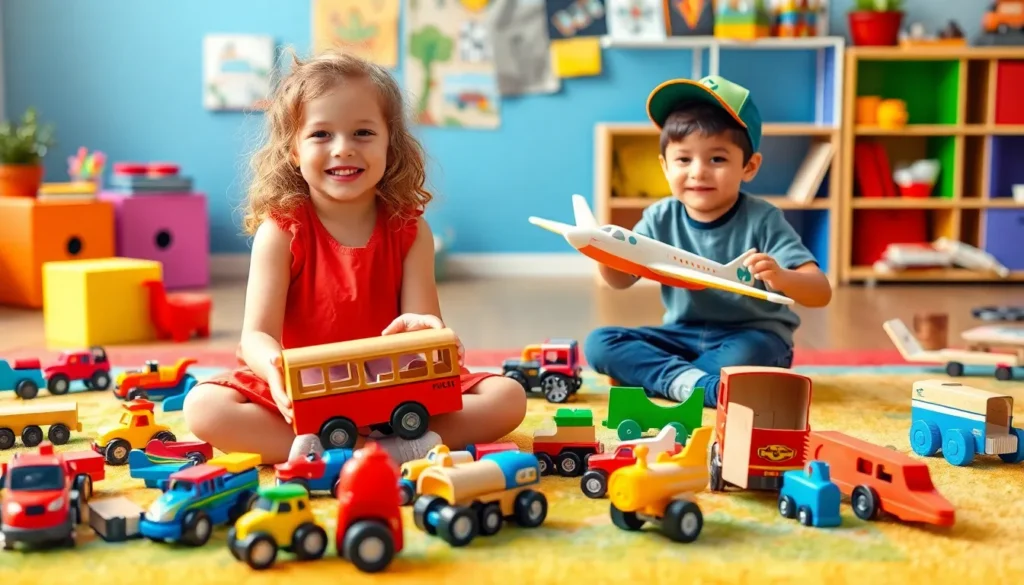
Transportation activities engage preschoolers by combining fun with learning opportunities. These activities enrich imagination and encourage skill development in various areas.
Learning Through Play
Play serves as a fundamental method for learning among preschoolers. Incorporating toy cars, trains, and planes into playtime ignites creativity. Children can role-play as bus drivers or pilots, navigating imaginary journeys. Engaging in these scenarios enhances problem-solving and builds vocabulary. Shape sorting with vehicles teaches categorization and improves hand-eye coordination. In addition, racing toy cars stimulates physical activity while encouraging cooperation during group play.
Craft Projects
Craft projects allow preschoolers to express creativity through transportation themes. Creating a cardboard box bus or painting paper plate airplanes gives children hands-on experience. Building models of vehicles fosters fine motor skill development. Using materials like scissors, glue, and crayons supports practical skills while enhancing creativity. Organizing transportation-themed craft stations encourages collaboration and improves social interactions. Furthermore, themed crafts allow children to explore different modes of transportation, helping them expand their knowledge in a fun, engaging way.
Outdoor Transportation Activities
Outdoor transportation activities provide exciting opportunities for preschoolers to learn while playing. Engaging with the environment enhances their understanding of different modes of transport.
Scavenger Hunts
Scavenger hunts stimulate imagination and encourage exploration. Preschoolers can search for various transportation items like toy cars, bicycles, or even trains at a nearby park. Instructors can create a checklist featuring pictures to help children identify their targets. Fostering teamwork, this activity builds collaboration skills as kids work together to find all the items. Engaging with the surroundings sharpens observation abilities while reinforcing vocabulary related to transportation.
Nature Walks
Nature walks offer a hands-on experience with transportation themes. During these walks, children can pretend to be different modes of transport, like boats floating on a pond or buses cruising down a path. Instructors can point out real-world transportation methods, like cars or planes seen overhead. These experiences promote physical activity and critical thinking about the environment. Discussions about the roles of various transports in daily life enhance cognitive skills and vocabulary as children learn to categorize and describe what they encounter.
Indoor Transportation Activities
Indoor transportation activities capture preschoolers’ imaginations while promoting essential skills. These activities blend fun with learning, making them engaging options for young learners.
Toy Vehicle Races
Toy vehicle races provide excellent opportunities to enhance motor skills. Children can race cars or trucks on different surfaces to learn about speed and friction. Setting up racetracks using tape or cardboard enables kids to explore the effects of incline and distance while practicing hand-eye coordination. Group races encourage cooperation, as preschoolers cheer for each other, fostering teamwork. Incorporating timed races introduces basic math concepts, as children can compare and discuss their race times, making the activity educational.
Storytime And Movement
Storytime and movement combine literacy and physical activity effectively. Reading books about various modes of transportation sparks children’s interest while prompting movement. For instance, while reading about trains, children can mimic train movements by crawling or chugging along. This active storytelling keeps preschoolers engaged and encourages them to act out scenarios. Activities like these enhance listening skills and expand vocabulary as they learn new transportation-related words. Following up with a discussion about the story helps reinforce comprehension and encourages preschoolers to share their insights about transportation.
Safety Considerations
Safety remains paramount during transportation activities for preschoolers. Engaging in these activities requires proper precautions to protect children’s well-being.
Supervision Tips
Careful supervision is crucial. Adults should monitor all activities closely, especially when children use toys that mimic real vehicles. Keeping a watchful eye prevents accidents and maintains a safe environment. Ensuring clear boundaries helps children understand their play area. Setting rules around sharing and taking turns promotes respectful interactions among peers. Discussing safety guidelines related to vehicles, such as looking both ways when pretending to cross streets, reinforces awareness of safety concepts.
Age-Appropriate Activities
Selecting age-appropriate activities is vital for fostering a safe play environment. For instance, soft toy vehicles and large building blocks are perfect for younger preschoolers. These toys reduce the risk of injury while providing hands-on learning experiences. Choosing simple crafts like paper airplanes encourages creativity without overwhelming them. For outdoor activities, nature walks or scavenger hunts should be designed to match children’s physical abilities and attention spans. Adapting tasks to their skill sets enhances engagement and minimizes frustration.
Transportation activities offer preschoolers a unique blend of fun and learning. Engaging in these activities not only fuels their imagination but also nurtures essential skills that contribute to their overall development. Through play with toy vehicles and creative projects, children enhance their motor skills and cognitive abilities while exploring the world around them.
Incorporating both indoor and outdoor transportation activities creates a dynamic learning environment. These experiences promote teamwork and critical thinking, ensuring that preschoolers are not just playing but also growing. By prioritizing safety and age-appropriate challenges, caregivers can foster a safe and enriching atmosphere that supports preschoolers’ curiosity and creativity. Ultimately, transportation activities lay a solid foundation for lifelong learning and exploration.